How to organize a lunch-and-learn session with a simple food tasting
· Editorial team newsfromdallas24.com
Organize a lunch-and-learn by choosing one learning goal, confirming attendance and dietary needs, and setting a clear finish time. Add a small, optional food tasting that supports the topic, share ingredient information beforehand, and leave time for discussion. The proposed format below keeps preparation manageable and gives people a useful way to participate whether or not they taste the food.
Choose one goal people can use
Start with a single sentence describing what attendees should leave able to do. Ask potential participants what interests them before choosing the topic. A narrow goal makes it easier to prepare a short presentation and decide whether a tasting adds anything useful.
One editorial proposal is a session on describing food clearly: participants practice separating an observation, such as a crisp texture, from a preference, such as liking that texture. Two small samples provide a shared discussion point. Other possible goals include asking better comparison questions or explaining a preference without assuming everyone shares it.
Keep the invitation specific. State the topic, learning goal, location, start and finish times, whether lunch is provided, and that both attendance and tasting are voluntary. Small tasting portions should not be presented as a full lunch.
Confirm ingredients before choosing samples
Request RSVPs early enough to plan food quantities. Give attendees a private way to share allergies, dietary restrictions, and preferences. Use those responses to choose the menu, rather than asking people to work around food already ordered.
For the proposed tasting, choose two easy-to-portion foods with complete ingredient information available from their packaging or supplier. Send that information before the session and keep it available beside each sample. Include sauces, toppings, and accompaniments in the information you share.
- Confirm the exact products or recipes being served.
- Ask the supplier about ingredient and preparation questions raised by attendees.
- Keep packaging or written supplier information available for reference.
- Provide separate serving utensils for each sample.
- If suitability remains uncertain, explain that uncertainty and make participation without tasting straightforward.
Set up a simple, comfortable room
Choose a space where people can sit, eat, and see the speaker comfortably. Check any screen, microphone, or presentation equipment before attendees arrive. Coordinate food arrival and setup so they do not interrupt the learning segment.
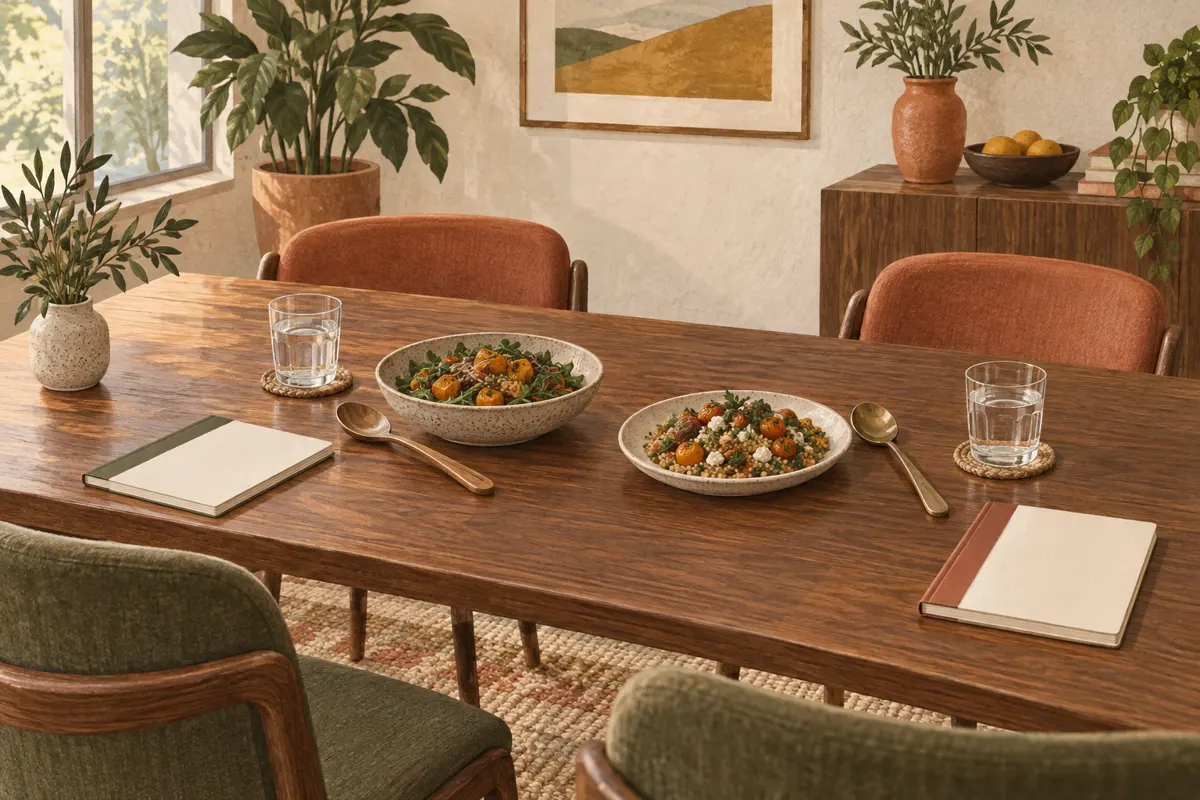
A practical setup proposal is to place lunch separately from the tasting samples. Label the samples A and B, with ingredient information clearly linked to each. Set out small plates, utensils, napkins, water, and a nearby waste bin. Assign one person to facilitate and another to manage serving and cleanup if help is available.
Make the same discussion materials available to everyone. Someone who skips tasting can compare the written descriptions, observe presentation, or comment on how clearly others explain their choices. Avoid asking anyone to explain a dietary restriction in front of the group.
Run a short agenda with optional tasting
The following 40-minute agenda is an editorial proposal. Adjust it to your workplace’s lunch arrangements, but keep the announced finish time fixed. Have food and materials ready before the clock starts.
- Minutes 0–5: Let people settle in with lunch. Explain the goal, agenda, and option to participate without tasting.
- Minutes 5–15: Teach one idea with a brief example. For the description topic, distinguish observable qualities from personal preferences.
- Minutes 15–25: Introduce samples A and B, point out ingredient information, and invite optional tasting. Ask participants to note one observation about each.
- Minutes 25–35: Discuss observations in pairs, then invite a few contributions to the whole group.
- Minutes 35–40: Restate the learning goal, collect one takeaway, and close on time.
Guide the discussion and finish clearly
Use questions tied to the learning goal rather than turning the tasting into a contest. These proposed prompts work for the food-description example:
- Which words describe a quality someone else could notice?
- Where did an observation become a personal preference?
- What follow-up question would help you understand another person’s choice?
- How could you apply this distinction in a work conversation?
Invite contributions without requiring everyone to speak. If discussion expands beyond the topic, capture the question for later and return to the goal. Close with one concrete takeaway and a brief feedback question about what was useful. Share a short recap afterward, and assign cleanup in advance so the scheduled ending is also a practical ending.